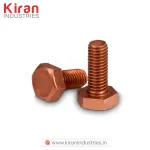
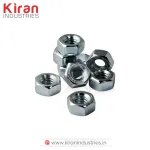
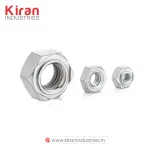
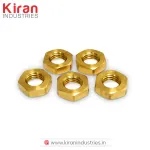
Not all joints can get "kinda secure. But, in heavy machinery, pumps and structural assemblies, where connection needs to be fail proof, this is where weld nuts come into play. There are no friction forces involved like in a bolt or screw, but in a weld nut it is fused to a metal surface which makes it a vibration resistant, permanent joint that will defy stress and shock loads.
Weld nuts are helping industries to eliminate traditional fastening systems, reduce loose parts failures, and resist vibration, such as in pumps and industrial equipment. Essentially: reduced callbacks and increased reliability. Weld nuts are the move if you have a need for an upgrade in your fastening game.
What Are Weld Nuts? Understanding Their Role in Industrial Fastening
So, what is the difference between a weld nut and a nut that you use every day? Simple — designed to permanently weld on a metal surface rather than screw on. The nut is then fused directly to the base metal by processes such as projection welding or resistance welding, so that the nut is firmly connected to it and cannot be moved.
After it is welded to the surface, it provides a permanent and self-aligned threaded joint, and as a result, bolts and screws can be mounted and dismounted, without the worry of the nut spinning or misalignment on the other side. A significant advantage in obstructions or assemblies which are difficult to reach, where it would be impractical to hold a nut.
Therefore, weld nuts are the preferred option for industrial fasteners, particularly in applications that require precision, strength, and durability while continuously being subjected to mechanical stress.
How Do Weld Nuts Work?
Curious about how weld nuts work? It all depends on heat, pressure and precision engineering.
- The electric current is concentrated on the small projections on the base of the nut during projection welding.
- This results in a strong localized heat which can lead to melting at the contact points.
- The pressure is applied at the same time and the nut is permanently joined with the base metal.
- The resulting composite is stronger than the existing material.
A trusted weld nut manufacturer guarantees that this process is done with close tolerance and strength restrictions, so each weld will hold up in the real world of industry stress and vibration.
Different Types of Weld Nuts Used in Industries
Every job doesn't require the same nut! There are various types of weld nut available to complement different load carrying requirements, space limitations and assembly requirements in various industries.
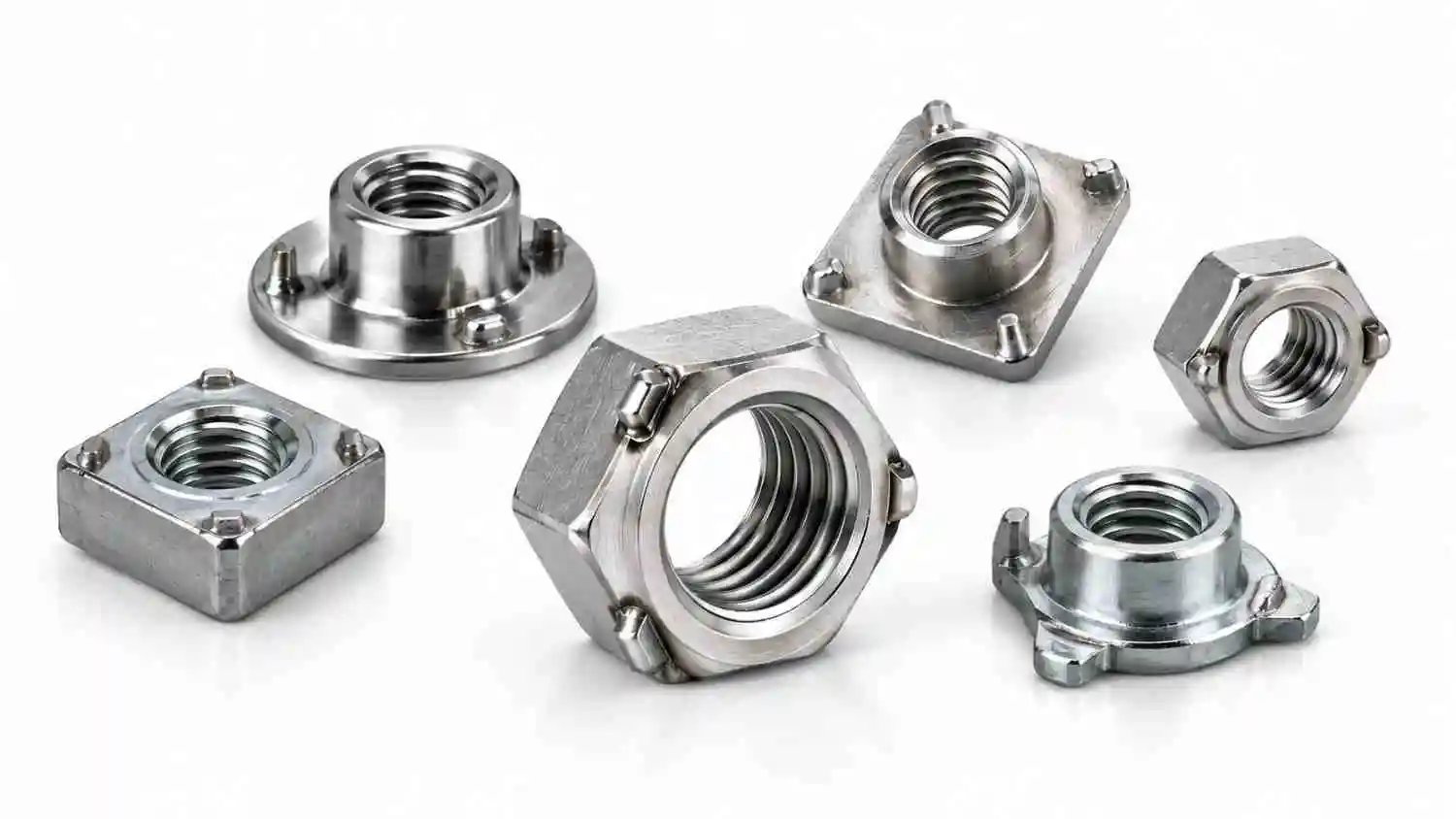
- Round Base Weld Nuts: for general strength.
- Square Weld Nuts: designed for torque resistance.
- Hex Weld Nuts: designed to provide a strong and reliable grip.
- Tab Weld Nuts: Automating precision aligned.
- Flange Weld Nuts: more lateral support through wider bearing surface
With these diverse designs, industrial weld nuts truly are versatile, whether they're being used for pumps or panels, or even in the construction of heavy machinery frames. Let's take a look at three common types.
Square Weld Nuts
Tightening the square weld nuts adds additional surface area to the nut and results in improved torque resistance and reduced spinning under load. These materials are good choices for parts that are subjected to continuous tightening and vibration, such as assemblies for machinery or parts for fabrication. The flat sides also ensure easier positioning during automated welding without compromising the weld strength, thus saving time in production lines.
Hex Weld Nuts
If torque resistance is absolutely necessary, then hex weld nuts get the job done. Their six-sided design spreads mechanical stress evenly, giving a firmer grip than standard shapes — a big reason automotive and heavy-duty equipment manufacturers rely on them. In addition to appearance, this type of weld nut is designed to resist loosening or tightening from repeated cycles and is well suited for high stress, high frequency applications.
Round Base Weld Nuts
Round weld nuts are designed for finesse and not force. They distribute pressure on sheet surfaces evenly so they are a perfect fit in sheet metal fabrication applications where warping or cracking can be a concern. Lightweight equipment panels and enclosures are best suited, as the design reduces stress concentration and yet provides a reliable threaded connection.
Importance of Weld Nuts in Strong Industrial Fastening
There's more to the benefits of weld nuts than simply to hold things together, there's to hold them together right. Whether it's permanent joints or sleek production lines, weld nuts are the answer to problems that conventional methods may not be able to solve.
Permanent and Reliable Threaded Connections
Once welded, a nut isn't going anywhere. This fusion prevents loosening, shifting or misalignment over time, making it a permanent fastening solution, as opposed to bolted-only assemblies. Heavy duty industries and those with continuous use equipment will reap that reliability in the form of less downtime for maintenance and significantly reduced future risk of joint failure.
Excellent Vibration and Shock Resistance Properties
Regular fasteners are a hard act to follow, but not in this instance. Automotive assembly lines and heavy engineering environments rely on vibration resistant weld nuts to keep nuts holding tight in the face of repeated shock and stress. Unlike standard nuts that will loosen over time, welded joints will remain tight, assuring consistent performance under pressure.
Simplicity of Installation and Efficiency of Assembly
The less free material, the quicker the construction. By eliminating the need for a back-side hole, weld nuts make the entire assembly process easier. For this reason, they are popular choices for industrial fastening solutions looking for improved throughput, particularly in high-speed automated manufacturing processes where performance and reliability can mean the difference between profit and loss.
Applications of Weld Nuts Across Different Industries
Weld nuts applications are in a variety of industries, from automotive to construction, where durability and strength are critical. The industrial weld nut is a reliable fastener when mechanical fastening is inadequate, as it can be used in various metals and loads.
- Automotive manufacturing
- Heavy engineering and machinery
- Constructions and metal works.
Let's see how they are used in each industry:
Automotive Industry
The automotive weld nuts are accessible anywhere in the vehicle manufacturing industry, from body panels and chassis parts to brackets and components that need to be fastened securely and effectively against vibration. These joints are exposed to constant road stresses and movement, therefore welded attachment ensures that panels and components remain securely attached without any movement over the years of use.
Heavy Mech Manufacturing
Fasteners cannot fail during operation in heavy industry. Heavy duty weld nuts have been designed for such pressure and hold machinery frames and fabricated parts that are constantly subject to load and vibration. The permanent bonding holds critical equipment in place and maintains it structurally sound even under the most rigorous 24-hour, industrial environment.
Building and Metal Work Making
Structural fabrication requires fasteners that won't move, and weld nuts provide that. They are also effective construction fasteners, which helps to keep steel frames and metal assemblies secure. When working with a reliable weld nut supplier, all welds will be strong and safe, meeting all construction project requirements.
Factors to Consider Before Choosing Weld Nuts
Choosing weld nuts should not be a matter of chance and hope — just taking any random size is not the spirit of the game. It's all about matching materials, size, finish to the application, plus working with the right weld nut manufacturer makes it so much easier.
- Material selection
- The size, type and loading requirement of the thread.
- The surface finish and corrosion resistance of the product
Let's dive into what's really important.
Material Selection
The material is basically for you to choose, since it is based on your application. Stainless steel weld nuts are the choice for corrosive or sanitary applications, while carbon and alloy steel weld nuts are more suited for heavy industrial applications. Choose the wrong, and the quality of weld strength, durability and performance is hit.
Size, Thread Type and Load Requirement
Wrong dimensions? Weak joint. No shortcuts here. Correct weld nut size, matching thread pitch, and load-bearing capacity all need to sync up with your assembly's needs. As with all industrial fasteners, precision is not a luxury, it's a necessity when it comes to holding up during stress.
Surface Finish and Corrosion Resistance
Bare metal is not a good bedmate of a harsh environment. Typically zinc plated or coated, corrosion resistant weld nuts are able to withstand rust, moisture and chemical damage better than uncoated weld nuts. The right finish is essentially an added year of service life – particularly for outdoor equipment or outdoor facilities subjected to continuous use.
Why Choose Kiran Industries for Weld Nuts?
Searching for a weld nuts manufacturer that can supply high quality? What makes Kiran Industries shine:
- Backed by years of manufacturing experience for every weld nut produced.
- Thorough quality assurance for each batch for both strength and accuracy.
- Custom specs offered, sizes, material grades, etc., to your specifications.
- Well-developed industrial supply chain with timely and reliable deliveries in various sectors.
- Reliable in the automotive, engineering and fabrication sectors
This is why Kiran Industries is regarded as a one-stop weld nut manufacturer in India – no shortcuts, nothing but fasteners that last.
Weld Nuts Provide a Reliable Fastening for Industrial Applications
Weld nuts are the perfect solution for assemblies that need to hold tight under pressure. They are a more intelligent choice than traditional fastening solutions in numerous industries and are permanent, vibration resistant, and easy to install.
Looking for a weld nut that you can depend on? They are made by Kiran Industries for withstanding real industrial conditions, and not just lab testing. Try to reach out and get the appropriate fit for the next build.