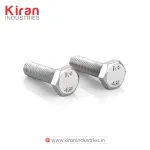
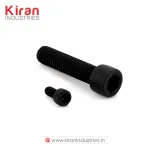
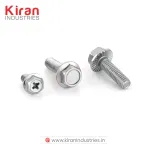
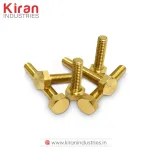
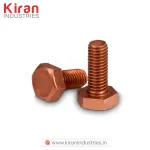
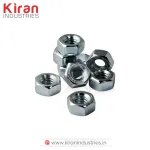
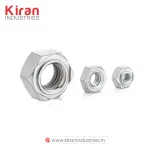
Before placing an order, the Engineers and the Procurement Department should ensure the accuracy of the information.
Fasteners are not small hardware in heavy engineering, infrastructure, fabrication, and maintenance of plants; they are load-carrying safety components. One inappropriately chosen or fitted bolt may lead to a loosening of joints, vibration, fatigue cracking, leakage, or even structural collapse.
Due to the increased strict compliance requirements and quality inspection in 2026, the procurement team, contractors, and maintenance engineers are no longer considering fasteners as their regular purchase. Purchasing bolts and nuts is now a technical process that entails engineering checks.
Before placing an order, one must consider factors such as material behaviour, mechanical strength, exposure to the environment, dimensional accuracy, and certificate traceability. This is a guideline for checking.
1. Material/Grade Choice
The contents of a bolt vary depending on how it responds to load, corrosion, temperature, and vibration. Practically, the most widespread reason for premature fastener failure is the improper material choice.
Carbon Steel Fasteners
Carbon steel fasteners are commonly applied, as they are very strong and relatively inexpensive.
Typical applications
-
Machinery assembly
- Structural fabrication
- Automotive components
- General industrial maintenance
Nonetheless, carbon steel is easily corroded. It also decays rapidly in moisture or open air unless it has a protective coating, like zinc plating, black oxide, or galvanisation.
Hence, carbon steel fittings are most appropriate in an indoor or enclosed space.
Stainless Steel Fasteners
The stainless steel bolts are mainly used on the basis of corrosion resistance.
SS 304 is suitable for general outdoor and non-aggressive corrosive environments, such as architectural cloth, food production apparatus, and piping stands.
SS 316: This is recommended for use in marine, coastal, and chemical plants, as it contains molybdenum, which makes a significant contribution to the pitting resistance.
Stainless steel is not even as strong as high-tensile alloy steel, but in many cases it provides longer service life in severe conditions and is therefore safer in the long run.
Alloy Steel Fasteners are also called High-Tensile
Alloy steel bolts that are heat-treated (Grade 8 or 10.9/12.9) offer very high tensile strength.
Used in:
- Heavy equipment
- Cranes
- Structural steel joint
The automotive industry uses these load-bearing assemblies.
They are difficult to deform under high torque and dynamic loads, but they should be clamped with the help of calibrated torque devices. Poor tightening may also fail even when it is strong.
1. Non-Ferrous Fasteners
Some of the applications need nonmagnetic or conductive fasteners:
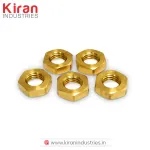
Brass: switchgear, earthing systems (corrosion-resistant, best conductor), electrical panels.
Aluminium: lightweight buildings, panels, and aerospace type.
2. Strength and Load Requirement
The mechanical properties are what control the fastener performance, based not only on the size but also on the mechanical properties. All joints that are bolted are subject to tension, shearing, and clamping forces.
Tensile Strength
This is the highest level of stress that a bolt can hold before it breaks. It is critical in:
- Connections of structural steel
- Heavy machinery mounting
- Yield Strength
The point of permanent elongation is yield strength. When a bolt gives way, there is a loss of clamping strength, and this results in loosening, vibration, and fatigue failure.
Grade Markings (Bolt Head with always check)
Grade 2 – Light duty
Grade 5 – Medium duty
Grade 8 represents high tensile/heavy duty.
Metric bolts may display 8.8, 10.9, or 12.9.
Unmarked bolts are a very big indicator of low-quality manufacturing.
3. Corrosion Resistance & Environmental Exposure
Many fastener failures do not depend on loads; they occur due to corrosion of the bolt's cross-section.
- Zinc Plating
- Cost-effective corrosion protection
- Appropriate for indoor industrial gadgets
- Do not use it outdoors for a long period
- Hot-Dip Galvanised (HDG)
Plates are coated with a heavy layer of zinc and are suitable for:
- Outdoor structures
- Transmission towers
- Solar installations
- Infrastructure projects
It offers long-term waterproofing and weatherproofing
Specialty Coatings
The following industries demand high coatings:
- PTFE (Teflon): chemical plants and piping systems (low friction, chemical inertness)
- Ceramic finish: marine or high-temperature setting.
- Phosphate coating: enhances the tightening lubrication.
The proper compatibility of the coating with the environment greatly contributes to the service life.
4. Type of thread – Dim. Acc
The most robust bolt cannot withstand the wrong fit. One common cause of joint failure is poor thread engagement.
Thread Compatibility
The nut must match:
- Diameter
- Pitch
- Standard (Metric / UNC / UNF)
- Cross-threading ruins threads and significantly decreases holding capacity.
Coarse vs Fine Threads
Coarse threads: quicker to assemble, construction-friendly, and softer materials.
Finest threads: increased clamping force and better resistance to vibration, which are frequently found in fine machines.
Head & Drive Selection
Select based on the requirement of torque and the space of installation:
Hex head → general purpose
high torque in a narrow space socket head cap
Torx → precise torque control
Flange head load distribution does not require a washer.
5. Quality Traceability and Compliance
By the year 2026, documentation will no longer be optional. Most of the projects do not pass inspection because of the uncertified fasteners.
Certifications to Verify
Firm manufacturers adhere to:
- ISO 9001 – quality management
- ASTM standards – mechanical properties
- DIN standards: dimensional accuracy
BIS certification – most fasteners in India need this certification
6.Mill Test Certificate (MTC / MTR)
A material test report should always be requested. It verifies:
- Chemical composition
- Heat treatment
- Tensile strength
- Yield strength
- It is also batch traceable.
Supplier Reliability
There is a rise in the use of counterfeit fasteners. Buy only from the suppliers with:
- Documented quality control
- Inspection facilities
- The documentation includes a history of exports or project supply.
- An inexpensive fastener, which will not serve, is the most costly element of the project.
Conclusion
Industrial bolts and nuts are not commodities; they are important engineered parts. Fasteners of the right type are directly proportional to equipment reliability, safety, and maintenance cost.
Before purchasing, verify:
- Material grade
- Load capacity
- Corrosion protection
- Dimensional accuracy
- Certification documentation
The correct procurement strategy in 2026 does not consist of selecting the lowest-priced fastener; it consists of selecting the properly specified and certified fastener. Well-chosen bolts guarantee safe joints, increased service life and safe industrial operations.