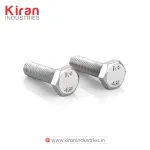
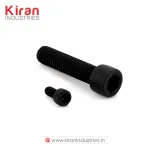
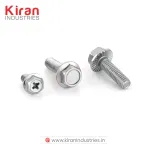
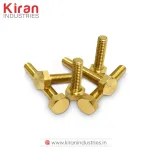
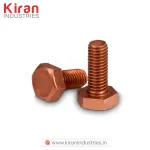
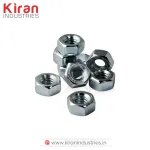
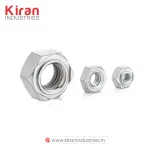
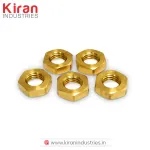
In industrial processes that use large-scale operations, heavy machinery, a high level of engineering, or a high value of material, these factors are usually insignificant. In many cases, the longevity of a complete project relies on the presence of the tiniest of parts – fasteners.
People often view bolts, nuts, screws, washers, studs, and anchors as inexpensive consumables. This fact leads several project planners to undervalue their role in operations. In reality, a single missing fastener can halt the progress of millions of dollars' worth of equipment and labour in manufacturing plants, refineries, construction projects, and infrastructure development.
Timely delivery of fasteners is not thus a logistical convenience but an operational requirement. It has direct impacts on safety, compliance, productivity, cost control, and project schedules. In the proper operation of supply chains, fasteners are not visible. The entire project experiences the impact of a delivery failure.
This paper describes in detail why a dependable and timely supply of fasteners is among the most important success factors in the implementation of industrial projects.
Fasteners: The Silent Backbone of Industrial Engineering
The mechanical assembly is dependent on the fasteners. In contrast to the welded joints, in the bolted connections, the structure and equipment can be assembled, maintained, repaired, and replaced without causing permanent harm to parts.
All industrial systems rely on thousands and even millions of fasteners:
- Structural steel structures
- Pressure vessels
- Boilers and heat exchangers
- Pumps and compressors
- Pipelines and flanges
These include both machinery and heavy equipment.
- Automobile and rail parts
- Electricity plants and windmills
Fasteners, though small, are load-bearing components. They are tensile forces, shear loads, vibration stress, thermal expansion forces, and pressure containment.
If the correct fastener is unavailable, the assembly process stops. There is no alternative to it, which is common with other materials. There is no alternate hardware bolt that can take the place of a Grade 8.8 flange bolt that is missing.
Specification engineering determines:
- Material composition
- Mechanical strength
- Coating
- Thread tolerance
- Corrosion resistance
That is why the fastener supply is not a purchasing detail, but it is a project-critical activity.
1. Reducing Production Ramping and Project Schedule Slips
Preventing Work Stoppages
The industrial projects run in coordinated order. Without anchor bolts, structural erection cannot take place. The installation of machinery cannot start without foundation bolts. Flange bolting is necessary to pressurise piping.
Even one special nut that is missing can prevent:
- a turbine installation
- a refinery pipeline
- an automotive assembly line
- a fabrication shop
In contrast to shortages in raw materials, shortages in fasteners completely stop the development process since it is impossible to continue assembling part of the product.
For example:
If a pipeline flange requires 16 high-tensile studs, but only 15 are available, the joint becomes unsafe to install.
Work stops completely.
Influence on Workforce Productivity.
Labour and manpower sources used by industries and contractors are costly. In case of unavailability of materials:
- Technicians wait
- Cranes remain idle
- Supervisors procrastinate inspections
- Engineers reschedule tasks
Research in the manufacturing operations always indicates that there is a measurable amount of time wastage in waiting to receive the tools and parts. Even a few hours a day of stoppage will amount to a large loss of productivity over weeks.
On-time deliveries of fasteners keep crews constantly productive and projects in a continuous state of operation.
2. Assuring Structural Integrity and Safety
Connectors are not just fasteners; they are mechanical parts that are safety-related.
Conformance to Engineering Standards.
The international standards that industrial fasteners should meet include:
- ASTM (American Society of Testing and Materials)
- DIN (German Institute of Standardisation)
- International Organisation of Standardisation (ISO)
These standards constitute mechanical properties such as:
- yield strength
- tensile strength
- hardness
- elongation
- proof load
Delays that occur in the delivery process are likely to tempt site teams to use alternatives or local fasteners. This is very dangerous, as wrong fasteners can:
- Deform under load
- loosen due to vibration
- fail under pressure
- corrode prematurely
Avoidance of Structural Failures
An example of such applications is as follows:
Steel Structures
The structural bolts ensure consistency in the buildings, bridges, and towers. Inaccurate supply can affect the misalignment and misdistribution of loads.
High-Pressure Piping
High-pressure flange joints are used in refineries and chemical plants. They depend on the correct tension of bolts to hold dangerous liquids. The incorrect fasteners may lead to leakage or disastrous accidents.
Heavy Machinery
Rotating equipment causes dynamic vibration loads. The wrong fasteners may loosen, which leads to mechanical failures or accidents.
Therefore, the safety of workers and citizens directly depends on timely delivery.
3. Financial Impact and Cost Control
Fasteners can constitute a small fraction of project costs, yet the schedule losses they cause are disproportionately large.
Evading the Contractual Fines.
Infrastructure and EPC projects (engineering, procurement, and construction) typically implement strict milestone deadlines. Missing deadlines triggers:
- penalty clauses
- liquidated damages
- contract disputes
Latent delivery of fasteners may delay the project and push its completion dates outside of contractual obligations.
Eliminating Emergency Procurement
In case fasteners are not delivered on time, procurement teams are forced to take extreme steps:
- air freight shipments
- premium vendor purchases
- emergency fabrication
- These techniques can greatly contribute to the expenditures, in most cases, several times more than the intended procurement.
Just-in-Time Inventory (JIT) provides inventory support
The current industry adheres to JIT inventory controls to minimise waste and costs.
Storage costs, warehouse space, material damage, and capital blockage
Good suppliers of fasteners also help the companies uphold a small stock level and ensure a constant supply. Unreliable delivery causes companies to keep a large safety stock, which raises the working capital requirement.
4. Facilitating Effective Project Planning.
The industrial projects rely on the sequencing of tasks. Foundation work, mechanical erection, piping, electrical work, and testing are some activities that depend on each other.
The Ripple Effect of Delay
When fasteners are delayed:
- Installation is postponed
- Inspection cannot occur
- Testing is rescheduled
- Commissioning shifts
- Project handover delays
Numerous contractors and subcontractors experience this domino delay simultaneously.
Coordination Across Teams
Large projects involve:
- civil engineers
- mechanical teams
- electrical contractors
- quality inspectors
- safety auditors
Every schedule is dependent on the availability of materials. Fasteners are facilitators of assembly, and therefore their absence interferes with the whole chain of workflow.
5. Enabling Quality Checking and Control
Quality assurance is a compulsory procedure in the construction and manufacturing industries.
Importance of Verification
In the case of the timely arrival of fasteners, quality teams will be able to do the following:
dimensional inspection
- thread gauge checks
- checking of the materials grade.
- coating inspection
- hardness testing
The process involves analysing the chemical composition.
Lateness leads to immediate installation without mandatory inspection, increasing the risk of concealed defects. Material Traceability
Important projects are to be documented:
- mill test certificates (MTC)
- heat number traceability
- coating certifications
An appropriate lead time will make sure that documents are reviewed before installation.
The Operational Risks of Late Heavy Fastener Supply
The latent delivery poses several real-life threats:
- equipment misalignment
- flange leakage
- structural loosening
- vibration failures
- corrosion damage
- safety incidents
Such failure in industries like oil and gas, power generation, and petrochemical plants can lead to environmental dangers and closure.
Most Timely Fastener-Dependent Industries
Some industries are highly sensitive to the supply of fasteners:
Construction and Infrastructure.
Structural bolts are required in steel erection, bridges, metro rail, and commercial buildings.
Oil & Gas
Certified high-pressure fasteners are needed in pipelines, offshore rigs, and refineries.
Power Plants
High-temperature fasteners, which are special, are used in boilers, turbines, and heat exchangers.
Automotive Manufacturing
Thousands of fasteners per vehicle make up assembly lines. The scarcity brings production to a halt.
Heavy Engineering Machinery
Big equipment assemblies need precision fasteners with precise torque profiles.
The Reason Why You Should Select an Appropriate Fastener Supplier.
An effective supplier of fasteners does not just sell. They are logistical and technical assurances.
Key capabilities to look for:
- The availability of stock is consistent.
- wide product range
- standard compliance
- technical guidance
- quality documentation
- dependable logistics
- emergency support
Senior suppliers also help in the selection of the right grades, such as:
- high tensile steel
- stainless steel (SS304, SS316)
- alloy steel
- galvanised and coated fasteners.
Best Practices in Ensuring Fastener Availability in a Timely Fashion
Organised procurement can help companies avoid delays.
- Accurate Forecasting
Determine fastener requirements at the initial stage of project planning.
- Approved Vendor Lists
Pre-screen the suppliers in terms of quality and delivery performance.
- Buffer Stock in Case of Critical Items.
Have a minimum safety stock of speciality fasteners.
- Documentation Planning
Prepare material test certificates and inspection procedures
.
- Supplier Communication
Preeminently share project schedules with suppliers.
The Strategic Value of Logistics.
Another problem in logistics management is fastener supply. Critical factors include:
corrosion-preventive packaging.
- correct labeling
- lot traceability
- transport protection
- delivery tracking
Professional suppliers employ organised inventory and dispatch systems to prevent shortages at the end of the day.
Conclusion
Despite their small size, the functions of fasteners are incalculable. They connect structures, fix machines, close pressure systems, and guarantee safe mechanical operation. The industrial assembly cannot take place without them.
Fastener delivery guarantees on-time protection:
structural safety with kiran Industries
- worker protection
- productivity
- project schedules
- financial performance
- corporate reputation
In contemporary industrial projects, time lag is never quantified in days but rather in terms of cost per hour. And in the most unexpected cases, those expenses are incurred because of the lack of a mere bolt or nut.
This is why businesses must not look at fastener supply as the normal buying or purchasing, but as essential project infrastructure. Working with a reputable fastener manufacturer or supplier ensures uninterrupted, safe, and cost-effective operations. Large components do not normally result in major failures in industrial engineering, but small details do. One of those details, which defines the success or failure of a project, is fasteners.