One loose component can cause a cascade of effects that all impact on the safety, dynamic performance and lifespan of the vehicle. While many people focus on the engines, brakes and electronics, one of the smallest and most overlooked vehicle components, nuts and bolts, are responsible for holding the entire vehicle together. When they come loose, effects can vary from annoying vibrations to devastating mechanical damage.
Automotive fastener failure is a common problem common to vehicles as well as industrial equipment. If you are trying to become an engineer, an undergraduate student, a maintenance technician or an automotive professional and you know the reasons for fastener failure, you can almost certainly speed up your work and reduce repair costs and time.
Most fastener failures can be avoided. Correct materials, installation and inspection intervals in operation will greatly improve reliability and safety.
What Is Automotive Fastener Failure?
Failure of automotive fasteners occurs when a fastener is no longer capable of securing parts together. This could be due to damage resulting from vibration, wear, corrosion or a failure being installed or being subjected to a load greater than its design capacity.
Consider a bicycle wheel. If a small nut unscrews, the wheel begins to wobble and instability is introduced. Vehicles function similarly, however, at significantly higher loads. A dropped fastener in the suspension, engine or body structure can influence the vehicle as a whole.
Cars today have thousands of fastening points, which makes the selection of an appropriate fastening solution for automotive fastenings all the more important when it comes to long-term durability.
Types of Automotive Fasteners
There is a fastener designed for each different application.
Bolt Fasteners
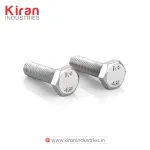
Magnets and fasteners allow for making highly efficient mechanical joints, giving high load capacity. They are popular on engine systems, chassis, and suspensions.
Screw Fastener
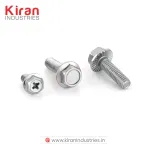
A screw fastener forms threads when it is inserted into a material or when it slips into use through lightly threaded holes. The makers of screws often fit them into interior panels and light parts.
Anchor Fasteners
Anchor fasteners – act as fixing points for components that need additional retention. Used widely in industrial heavy engineering work and in specific automotive assemblies.
Stainless Steel Fastener
Corrosion protection: (Application) Corrosion-resistant fastener provided by stainless steel is best suited to corrosion resistant application. These fasteners are recommended for use in moist environments and atmospheres, which may include salt and ice.
Specialty Fasteners
Certain specialised vehicle requirements are met by the use of dedicated parts such as a bullet fastener for trim securement, a fan fastener for radiators and cooling system assemblies and dedicated options such as an 8mm fastener or 10mm fastener for engineering-specific needs.
Common Nuts and Bolts Used in Vehicles
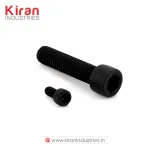
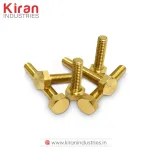
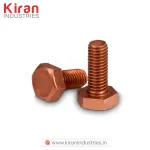
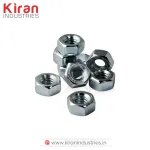
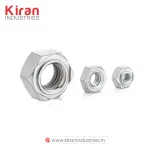
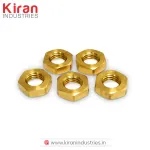
Automotive assemblies easily have Bolt, Allen Bolt, Flange Bolt, Brass Bolts, Copper Bolts, Hex Nut, Weld Nut, Brass Nut, Copper Nut, and Flange Nut as products. All of these products provide benefits to specific types of loading, conductivity, and environment.
Why Do Auto Fasteners Fail?
Knowing the causes helps you to prevent the problems.
1. Excessive Vibration
Cars are in a constant state of vibration of engines, landscapes and running parts.
Repeated vibrations can lead to a loss of joint tightness and a consequent reduction in the clamping force. This is commonly observed with wheel assemblies, exhaust system and engine mounts.
2. Incorrect Torque Application
Most failures start during the installation.
Allow the fastener to be subjected to the minimum desired torque, but not too much that the fastener is either over-torqued and stretches, deforms or cracks. Or too little torque, which allows the fastener to become loose in operation.
The research confirms that incorrect tightening is one of the main causes of fastener failure.
3. Corrosion and Rust
Corrosion caused by water, chemicals, and road salt.
Corrosion wastes away the advantages of the thread and destroys its building strength. This will be more serious if manufacturers choose the wrong materials and operate them in a difficult environment.
4. Fatigue Failure
Repeated loading and unloading lead to microscopic cracks.
These cracks continue to propagate until failure occurs. Typically, this form of fatigue failure occurs in highly stressed automotive parts.
5. Poor Material Selection
They are not all equally effective.
An adverse effect of underusing a weaker fastener with a part that requires a high strength is early failure. Components should be specified for the load and conditions in which they are used.
6. Misalignment During Assembly
Incorrect positioning of the mandible causes abnormal loading of the retention system.
A top-quality component is useless if a technician applies the wrong torque or angers it in.
Fun fact: There may be over 3000 individual fasteners inside a modern-day passenger car and each one is there for a defined engineering reason!
Quick Comparison of Common Failure Causes
Here is the easy comparison between common failure causes:
| Cause |
Main Effect |
Risk Level |
Prevention |
| Vibration |
Joint loosening |
High |
Locking systems |
| Over-tightening |
Cracks and stretching |
High |
Correct torque |
| Corrosion |
Material weakening |
Medium |
Protective coatings |
| Fatigue |
Sudden breakage |
High |
Regular inspection |
| Misalignment |
Uneven stress |
Medium |
Proper assembly |
How to Prevent Automotive Fastener Failure
This program can be successfully implemented through quality products, quality installation and maintenance.
Use the Right Fastener Types
Each application has specific needs.
In the case of structural assemblies, the Flange Bolt will be a preferable choice to offer a better distribution of load. For electrical applications, Copper Bolts are more acceptable.
Follow Correct Torque Specifications
Use torque tools always calibrated.
Manufacturers have reasonable torque specifications for a reason. This allows the clamping force to be maintained over the life of the component.
Choose High-Quality Materials
Good fastener producers also dedicate themselves to quality control, material testing and precision manufacturing.
Apply Protective Coatings
A coating can serve as a barrier to prevent the occurrence of rust and corrosion.
If falling environments are often met then use a fastener made from stainless steel or apply a corrosion-resistant coating. This will dramatically prolong its service life.
Conduct Regular Inspections
Problems will be detected early through regular checks.
Look for:
- Loose joints
- Rust formation
- Damaged threads
- Visible cracks
- Missing components
When detected early, no expensive repair is necessary.
Replace Worn Components Immediately
A damaged fastener must not be used.
Even insignificant damage to the thread may weaken the holding power.
Best Practices for Automotive Assembly
Practitioners often adopt other proven methods for enhancing fastening success.
Maintain Clean Threads
Dirt, grease, and debris can manipulate torque accuracy.
Fresher threads ‘screw’ down better and hold more securely.
Use Compatible Materials
If corrosion is occurring elsewhere, mixing incompatible metals can increase the corrosion.
Choosing compatible material enables increased durability and lifetime aspects.
Install Locking Features Where Needed
Lock washers, torque and thread-locking materials and lock nuts also aid in vibration to help prevent loosening.
A properly selected Hex Nut along with a locking device would enhance the job securing.
Common Mistakes That Lead to Failure
Despite the best efforts of experienced technicians:
Reusing Damaged Fasteners
A previously overstretched or corroded part may not function correctly upon reinstallation.
Ignoring Environmental Conditions
The performance is affected variously by heat, moisture, chemicals and vibration.
The selection of fasteners should take into account the service conditions.
Choosing Based Only on Price
Lower-cost components may not always seem attractive.
Yet the added costs of repairs and downtime when the component fails prematurely are often far higher.
Skipping Inspection Schedules
Small Problems. They become big problems if they are left unattended.
Performing regular maintenance can prevent unexpected breakdowns.
Did You Know? Industry research shows that misapplications of torque are responsible for a significant percentage of mechanically fastened joint failures at manufacturing and automotive assembly plants.
Pros and Cons of Automotive Fastening Systems
Here are the pros and cons of automotive fastening systems for your better understanding:
| Pros |
Cons |
| Provide robust and dependable joints. |
Can loosen under vibration. |
| Facilitate easier maintenance and repairs. |
Require proper torque to be applied when installing. |
| Available in various materials and sizes. |
Corrosion may reduce lifespan. |
| Cheaper than welding in most applications. |
Regular inspections are necessary. |
| Simple to swap in the event of breakage. |
The wrong choice can lead to failure. |
About Kiran Industries
Kiran Industries was started in 1985 and it is located in Rajkot, Gujarat and is a reputed manufacturer of industrial fasteners including bolts, nuts and customized fastening solutions. The company has been serving different industries such as automotive, construction, aerospace and engineering with more than forty years of experience. It is known to be highly quality oriented with a high level of manufacturing plants, internal testing laboratories and ISO certified processes. Kiran Industries focuses on accuracy, longevity and reliability of its products at the same time delivering customer satisfaction and timely delivery. Its innovation and adherence to international standards have contributed to developing long-term trust and a good reputation in the fasteners sector.’
Conclusion
Auto fasteners are small but can make a significant contribution to vehicle safety and performance. The majority of failures are caused by vibration, incorrect torque, corrosion or unsuitable materials. Choosing the right fastener, installing correctly and regular inspection can eliminate many problems and increase service life.