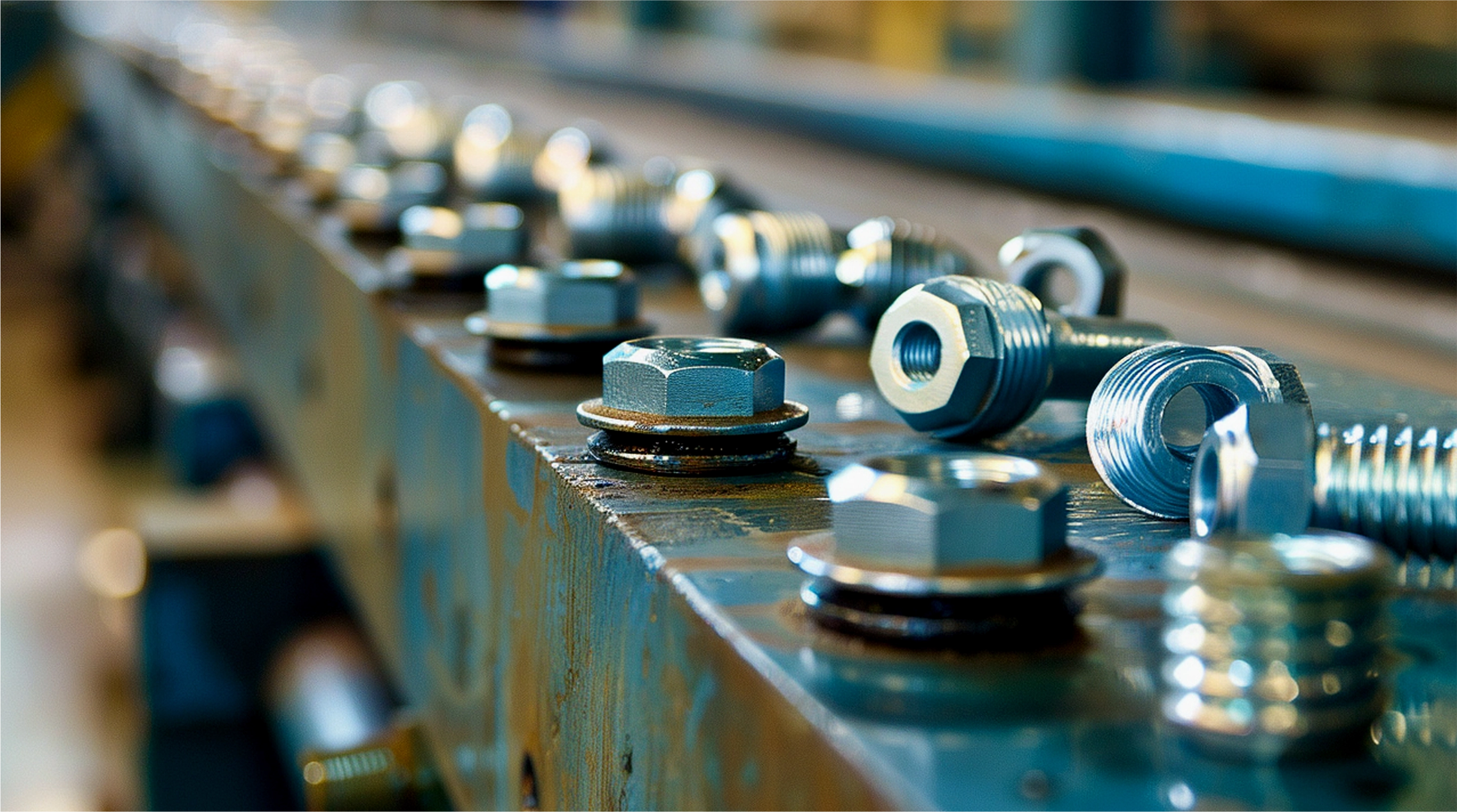
The Advantage of Bulk Fastener Supply for Large-Scale Industries
Production involves millions of parts. Every large-scale industry, including construction, infrastructure, oil and gas, heavy engineering, rail, automobile manufacturing, and industrial fabrication, relies upon thousands of small components to be produced and operate dependably. One of those elements is surprisingly important, which is fasteners (bolts, nuts, washers, studs, and anchors).
A shutdown of one plant, a project milestone delay, or even a rejection of an inspection may frequently be attributed to the unavailability of fasteners or their inconsistency. This is why big companies now more and more tend to buy in large volumes rather than make small purchases regularly. Bulk supply is not all about quantity but a strategic method of procurement that enhances stable operations, quality control, and cost-effectiveness.
The following is a closer examination of the direct implications of the bulk supply of fasteners to large-scale industries.
1. Guarantees 24 Hour Operation and eliminates downtime
The giant industrial processes are based on strict schedules. Production lines, building projects, and maintenance outages have tight schedules, and any slight delay may lead to massive losses.
Shopping for fasteners in small quantities may pose the following difficulties to companies:
- Stock-outs
- Delayed deliveries
- Emergency purchases are made at an elevated price.
- Project interruptions
A bulk supply of fasteners eliminates these risks. The industries will keep inventory to prevent inconveniences during maintenance, repairs, and installations.
For example:
A steel fabrication unit will not be able to cease assembling due to the unavailability of M16 bolts.
Maintenance shutdown in a refinery cannot afford to wait until stud bolts are delivered.
Anchor bolts are only sourced, and even then, a construction project cannot be halted.
Bulk stock serves as a buffer to its operations. Maintenance crews are able to act instantly to equipment malfunctions, and production lines are able to run without unplanned outages.
2. Significant Cost Savings
Cost reduction is one of the most apparent benefits of bulk procurement. Mass-based industries use fasteners in bulk numbers, and frequent small purchases result in extra procurement costs in terms of transportation, packaging, and administrative overheads.
Cost reduction in bulk buying is achieved because it:
- Lower Unit Price
- Manufacturers also reduce prices for high-volume purchases due to the ease and efficiency of production planning.
Reduced Logistics Costs
Frequent deliveries incur transportation, offloading, labour, and handling costs. Bulk supply consolidates the deliveries and reduces transportation costs.
Lower Administrative Cost
The purchase orders need order documentation, approval, invoicing, and inspection. The reduction of purchase cycles lowers the amount of administrative work and procurement overhead.
A small saving per piece will add up over time when the industries are using tens of thousands of fasteners each year.
3. Better Quality Uniformity
When multiple companies regularly order and supply fasteners, the issue of quality variation becomes critical. Variations in material content, thread tolerance, coating thickness and heat treatments may cause serious mechanical issues.
The inconsistent fasteners can lead to:
- Uneven clamping force
- Joint loosening
- Leakage in pipelines
- Premature fatigue failure
Bulk supply from a trusted manufacturer ensures batch uniformity. Every fastener will come out of the same production lot and will keep the same:
- Mechanical properties
- Dimensional tolerances
- Coating performance
This consistency is of utmost importance in the pressure vessel, structural steel, and heavy machinery industries, where the liability of joints is a very crucial factor.
4. Improved Inventory Planning and Control
Massive industries have to deal with thousands of spares. Lack of effective inventory control results in either a lack of supply or overstocking.
Bulk fastener supply enables the companies to adopt an ordered inventory system, including:
- Minimum stock level
- Reorder point planning
- Planned consumption of maintenance.
Companies can predict usage depending on:
Actually, preventive maintenance schedules.
- Project requirements
- Equipment overhaul cycles
- Having a stable supply, the procurement teams engage not only in reactive purchasing but also in effective procurement planning, which enhances operational efficiency.
5. Quickened Maintenance and Repair
The maintenance departments are very dependent on the supply of the appropriate fasteners. When repairing the equipment, technicians will not be able to wait until the procurement is approved or components are received by the suppliers.
In the situation where fasteners are ordered in large quantities:
Immediately, work starts on the repair.
Breakdowns in cases of emergency are quickly solved.
There is increased equipment availability.
As industries (such as cement plants, power plants, and manufacturing facilities) improve each time, faster maintenance directly increases the uptime and output of the machines.
6. Conformance and Paperwork Benefits
Projects in the modern industry are to be strictly documented. Auditors and inspectors usually check the compliance of fasteners with standard requirements, like ISO, ASTM, DIN, or BIS.
Mass ordering from a proven supplier gives:
- Mill Test Certificates (MTC)
- Material traceability
- Batch identification
- Records on standard compliance
Companies have a central documentation file instead of the previously practiced habit of piling up documents for several small purchases. This simplifies:
- Third-party inspections
- Safety audits
- Client approvals
- Project certifications
In other industries, such as infrastructure and power, documentation is usually a requirement for project acceptance.
7. Personalization and Customer Service
Suppliers tend to provide technical support and customizations when industries buy fasteners in large quantities.
Benefits include:
- Specific thread lengths and types are available.
- Special finishes (PTFE, galvanization, zinc-nickel)
- Project-specific grades
- The packaging and labelling process adheres to the site's specific requirements.
Mega customers are likely to have engineering assistance with the selection of appropriate fasteners, according to:
- Load calculations
- Environmental exposure
- Temperature conditions
- Vibration levels
This enhances security and avoids the wrong choice of material.
8. Supply Chain Stability
Industrial projects take months or years to run. Switching suppliers can cause compatibility problems in a project. Various manufacturers can have slightly different tolerances, coatings, and hardness ranges.
Bulk fastener contracts offer consistency in the supply chain. Long-term supply contracts are guaranteed to:
- Assured availability
- Fixed specifications
- Predictable lead times
The concept of stable supply chains is notable for EPC contractors and infrastructure developers who need to fulfil contractual deadlines.
9. Less Chance of Counterfeiting Fasteners
The industrial market occasionally presents counterfeits or poor-quality fasteners. They can resemble the same, yet they do not have the necessary mechanical strength or heat treatment.
Purchasing in large quantities through an already known supplier minimises the risks of:
- Unmarked bolts
- Incorrect material grades
- Fake certifications
Authenticated and proven sources enhance the credibility of the complete assembly and reduce the chances of safety hazards.
10. Effective Project Implementation
Major building and fabricating works rely on fasteners. The shortages may slow down the structural assembly, installation of piping, and equipment installation.
With bulk supply:
- The required sizes are always available to site engineers
- The installation crews operate on a 24/7 basis
- Project schedules are kept in place
This enhances productivity and assists the contractors in escaping penalty provisions in relation to the lateness of completion.
Conclusion
In the case of large-scale industries, fasteners are not mere hardware components; they are fundamental mechanical components that keep structures, machines, and systems together. Loss of Disruptions in fastener supply or quality can lead to time, accidents, and loss of profits.
A mass supply of fasteners has several benefits:
- Continuous operations
- Lower procurement costs
- Consistent quality
- Faster maintenance
- Credible records of compliance
- Supply chain stability
Rather than having frequent minor purchases, industries take advantage of making fasteners a strategic inventory category. A properly strategised bulk procurement strategy secures the joints, maintains the project, and never interrupts it.
The most cost-efficient fastener in the industrial activities of modern operations is not the cheapest; it is the one that is actually available, tested and suitable for use.