A practical buying guide to material selection, weld types, and sourcing for automotive-grade fasteners
Nobody notices a weld nut until it fails. That's just how it goes with small fasteners - tucked behind panels and brackets, quietly doing their job, until a joint comes loose or a bracket starts rattling. Get the material wrong and you're dealing with rust, cracked welds, or a fastener that won't hold torque past the first year on the road. This piece covers what actually matters when picking weld nuts for automotive work - material grade, weld style, and what to ask a supplier before committing to a batch.
What is a Weld Nut?
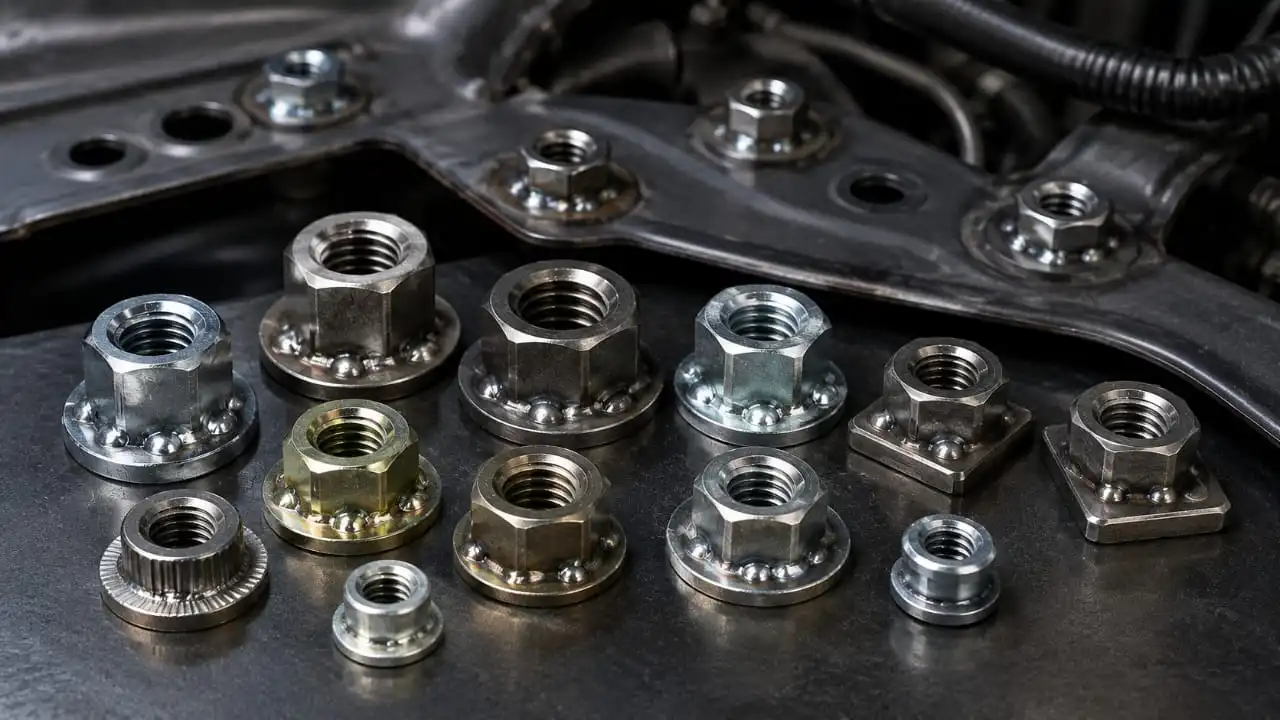
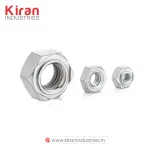
A weld nut is basically a threaded fastener that gets fused onto metal rather than bolted through it. There are small raised bumps on the base - projections - that melt under heat and pressure while welding, and that's what locks the nut flush against the panel. This is why weld nuts for sheet metal are everywhere in body shops. You get a threaded point on thin steel without drilling through both sides, and without adding weight you don't need.
Why is it Important?
Material isn't just a spec on a drawing. It's the difference between a joint that lasts and one that doesn't.
- Vibration, heat, road salt - all of it wears on a fastener over years, not months.
- Pick the wrong grade and you'll see corrosion, cracked projections, torque that just won't hold.
- Get the match right and the bond stays solid through welding and long after.
- There's also the practical side - weld nuts installation runs smoother when the grade is right for the job. Mismatched material slows the whole line down.
Sort this out early. It saves warranty claims later, rework nobody wants to do twice, and the safety questions that come up when something fails on a customer's car.
Trivia
Hex shapes stuck around for a reason - a six-sided nut lets a wrench grab it from nearly any angle, which matters a lot on a cramped, busy line.
Types and Variants
Not all weld nuts are built or welded the same, and the differences matter more than most people assume going in.
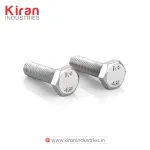
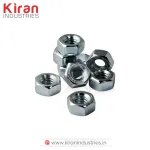
- Hex weld nut. Still the default choice for most jobs - wide face, easy grip, nothing fancy needed to tighten it.
- Weld nuts round. Low profile. Good pick when there's barely any clearance around the fastener.
- Square weld nut - less common on the floor, but it holds against rotation better without extra hardware.
- Weld nuts stainless steel for anything that's going to see moisture or road grime regularly.
- Carbon steel weld nuts round out the list - cheaper, tough, usually plated for general chassis use.
The welding side matters too. Round welds spread heat evenly and work well with circular projections. Square welds do better on flat-faced designs, giving a wider bonding area on thicker panels.
Features to Look For
A handful of things worth checking before locking in a supplier or a batch.
- Uniform projections. Uneven ones fuse inconsistently - simple as that.
- Clean threads after welding, not splatter-covered ones.
- Base material - is it actually carbon steel, stainless, or something else the spec sheet didn't mention clearly?
- Plating that doesn't interfere with conductivity during the weld.
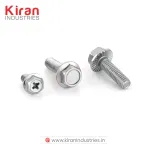
- Flange versus flat base changes how flush it sits and how the load spreads out.
- And consistency, batch to batch - this becomes non-negotiable once weld nuts installation is automated on the line.
Product Overview
Kiran Industries produces automotive-grade weld nuts alongside a broader lineup - hex nuts, flange nuts, bolts. As one of the established Weld nuts Manufacturers in India, they turn out round and hex profiles in carbon steel and stainless steel, keeping dimensional accuracy consistent through repeated welding runs. The emphasis stays on vibration resistance and durability, since these end up everywhere from engine bay brackets to load-bearing body panels. Projection height and thread cleanliness get checked before anything ships, so what arrives behaves the same way order after order.
Benefits
Nail the material and design, and it pays off on the floor and later on the road.
- Cleaner welds, fewer rejects.
- Less loosening from vibration or heat cycling over time.
- Stainless or plated grades simply last longer against corrosion.
- Fewer thread and splatter problems, which means less rework.
- And sourcing gets easier when you're working with Weld nuts Suppliers in India who actually hold their stated tolerances instead of just claiming to.
Applications/Use Cases
Weld nuts show up almost anywhere a vehicle needs a threaded point.
- Body panels and floor pans - weld nuts for sheet metal give a fixing point without drilling.
- Exhaust brackets and heat shields, dealing with real heat.
- Chassis and underbody sections exposed to salt and moisture.
- Seat mounts, interior trim, anything needing a low profile.
- Wiring brackets and harness clips tucked into the engine bay.
Did You Know?
Resistance welding, the process behind most weld nuts, goes back to mass vehicle production in the mid-1900s. The core idea hasn't changed much since then.
General Comparison Table
A general look at how the common materials compare - no sizes, no pricing, just the broad strokes.
| Material Type |
Corrosion Resistance |
Typical Strength |
Common Use Environment |
| Carbon Steel |
Moderate (With Plating) |
High |
General chassis and structural areas |
| Stainless Steel |
Excellent |
Moderate to High |
Exposed, humid, or road-salt zones |
| Alloy Steel |
Good |
Very High |
High-load, high-stress joints |
| Plated Carbon Steel |
Good |
High |
Cost-sensitive, indoor-facing components |
Fact
A modern car body can carry several hundred welded fastening points. Plenty of those are weld nuts holding brackets and panels together.
Expert Tips / Buying Guide
Worth doing these before placing an order for automotive weld nuts.
- Ask for certification, especially with weld nuts stainless steel going into anything exposed.
- Test a sample batch on your own welding setup first. Don't wait until the full order arrives to find out it doesn't fuse right.
- Make sure the supplier handles both round welds and square welds for whatever fixtures you're running.
- Compare a few Weld Nuts Dealers in India on lead time and actual support, not just quoted numbers.
- Ask if they also work as one of the steadier Weld nuts Wholesalers in India - useful for repeat, high-volume orders.
Kiran Industries
Kiran Industries was started in 1985 and it is located in Rajkot, Gujarat and is a reputed manufacturer of industrial fasteners including bolts, nuts and customized fastening solutions. The company has been serving different industries such as automotive, construction, aerospace and engineering with more than forty years of experience. It is known to be highly quality oriented with a high level of manufacturing plants, internal testing laboratories and ISO certified processes. Kiran Industries focuses on accuracy, longevity and reliability of its products at the same time delivering customer satisfaction and timely delivery. Its innovation and adherence to international standards have contributed to developing long-term trust and a good reputation in the fasteners sector.’
Conclusion
Picking the right weld nut material isn't a small line item - it shapes how safe and durable the finished vehicle ends up being. Whether it's a plain hex weld nut for general use or a stainless option for a corrosion-prone spot, understanding projection design, base material, and weld compatibility keeps you away from expensive failures down the road. A manufacturer that gets automotive tolerances makes the whole sourcing process easier and less stressful. If you're just searching weld nuts near me into a search bar, slow down a bit. Shortlist a few, check certifications, and then decide.