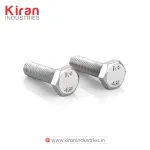
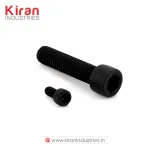
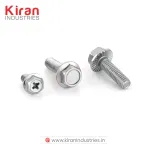
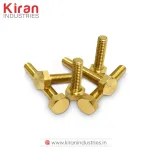
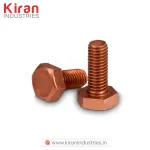
A skyscraper or a bridge might appear to be a whole, solid structure of building. It can be viewed and touched, but what people seldom see or feel are the small bits of steel that tie it all together. Bolts and washers were for generations made as two parts—a very simple, easy-to-predict design. Then innovation brought together washer and bolt, creating the high efficiency, one-piece hex flange bolt. A brilliant and innovative approach that revolutionized the realm of modern fastening.
It is a very effective method to make an industrial fastener, and it necessitates particular manufacturing and quality control. Elite flange bolts manufacturers have to conduct and test the structural integrity of every batch thoroughly before they reach a job site. After witnessing the performance of these diminutive components moving heavy loads without a drop in performance, you will know the reason why respected Flange bolts Suppliers and careful engineers use these on a daily basis without taking another second to consider.
What Is a Flanged Bolt?
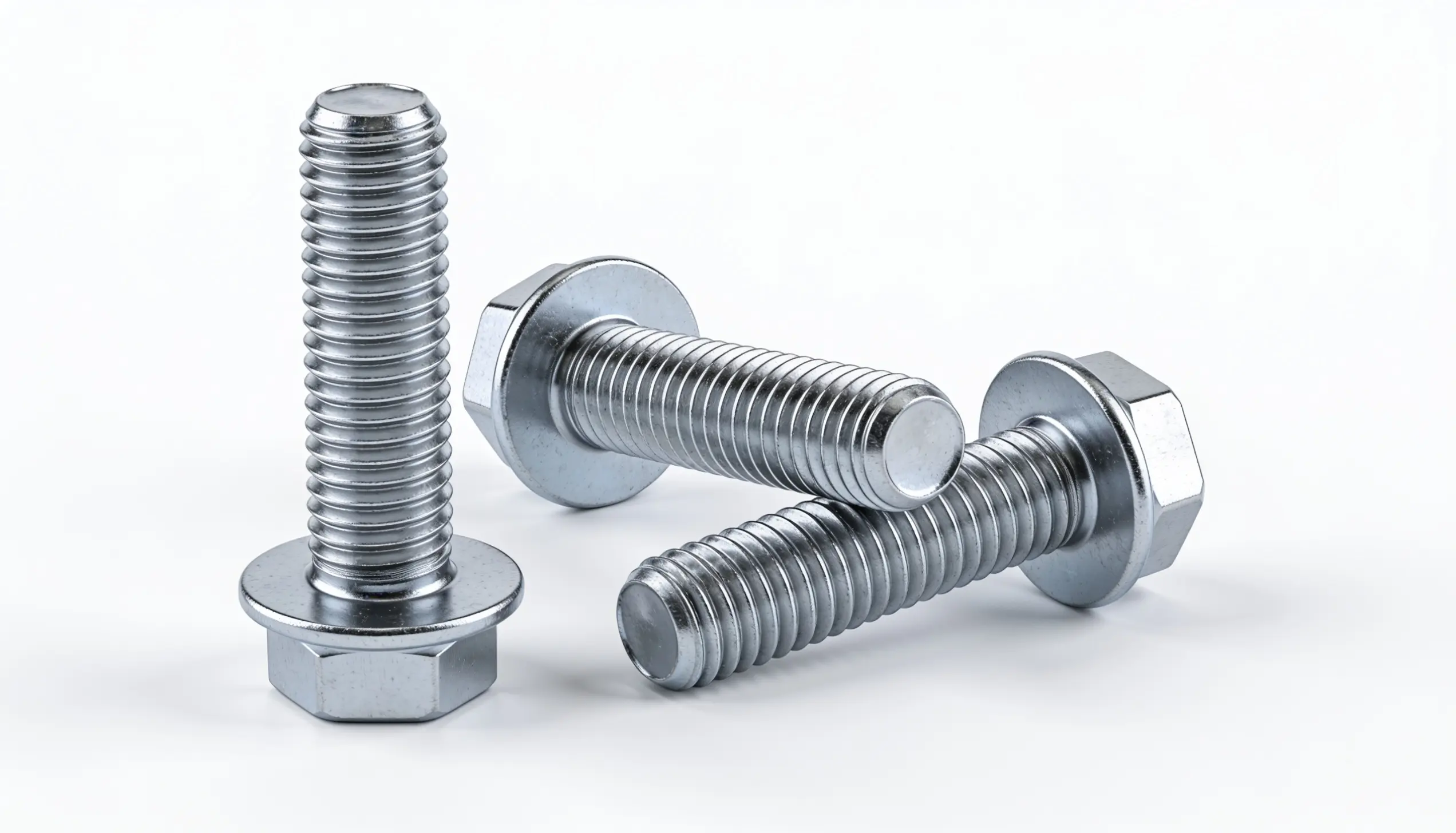
Flange bolts feature a circular or square skirt or "collar" directly under the bolt head. This integrated flange acts as a built-in washer that distributes clamping pressure evenly across the mating surface. By spreading the load, the flange prevents the bolt head from digging into or deforming the underlying material, effectively maintaining a secure connection even when subjected to severe, continuous operational vibrations.
Because of these distinct mechanical advantages, a flange nut bolt assembly is frequently preferred in heavy machinery, high-pressure pipelines, and structural steel frameworks. Together, they create an exceptionally secure, vibration-resistant joint that minimises structural shifting over time.
Did You Know?
The flange on a flange bolt can spread pressure over an area up to 2–3 times wider than a regular bolt head alone. That's why it grips so much tighter without crushing the surface underneath.
Types of Flanged Bolts
Here are the different types of flange bolts for in-depth understanding:
Hex Flanged Bolts
The standard hex flange bolt is the most prevalent variant used across major industries, featuring a standard hexagonal head combined with an integrated flange shoulder.
- Uses: Structural steel frameworks, automotive chassis assemblies, heavy machinery bases, and industrial pipe fittings.
- Advantages: Simple to install, ensures uniform pressure distribution, and completely eliminates the need for independent washers.
- Disadvantages: Requires more clearance space around the bolt head compared to standard compact fasteners.
Serrated Flange Bolts
The underside of the flange on these bolts features angled, tooth-like serrations designed to bite into the mating material.
- Uses: High-vibration environments, including combustion engines, wind turbine assemblies, and heavy industrial machinery.
- Advantages: Delivers exceptional resistance to rotational loosening caused by severe, ongoing harmonic vibrations.
- Disadvantages: The aggressive teeth can scratch, score, or compromise protective coatings and softer metal surfaces.
DIN Flange Bolts
These fasteners are manufactured in strict compliance with international dimensions and mechanical tolerances defined by European engineering standards, matching the widely recognized DIN 6921 flange bolt specification.
- Uses: Global infrastructure projects, cross-border oil and gas pipelines, export-grade machinery, and highly regulated manufacturing setups.
- Advantages: Ensures absolute dimensional interchangeability across global supply chains under stringent quality control.
- Disadvantages: Often carries a premium price point due to the rigorous testing and certification processes involved.
Non-Serrated Flange Bolts
These fasteners feature a completely smooth bearing surface on the underside of the integrated flange.
- Uses: Precision assemblies requiring flawless surface finishes, such as polished metals, painted body panels, or fragile materials.
- Advantages: Prevents scratching, gouging, or galvanic corrosion acceleration on coated or sensitive surfaces.
- Disadvantages: Lacks the mechanical anti-rotation grip provided by serrated alternatives.
The Critical Role of Flange Bolts in Infrastructure
Failing big structures is not easy to do all at once. Typically it is small, involving only one loose bolt. Let's take a steel highway bridge. Tiny flexing occurs each time a truck crosses. This happens thousands of times every day and little by little loosens regular bolts. This structural degradation is prevented by a hex flange bolt. Its broad collar firmly secures the steel girders to resist dynamic vibrations over the years.
The fight is similar in industrial pipelines, except that it's about pressure containment. A joint needs to remain completely stable in hot or cold temperatures, through freezing cycles, and during shifting soil movement. A loose joint here leads to leaks, expensive cleanups, or worse. The flange nut bolt combo seals the joint evenly, which helps to prevent the joint from being distorted by continuous internal pressure.
Wind turbines are subject to continuous aerodynamic movement. The constant vibrations and changes in wind direction transfer extreme stress directly down to the foundation. That's why structural engineers mandate DIN 6921 flange bolt standards, which are explicitly designed to withstand cumulative stress for years without any structural weakening.
Did You Know?
A wind turbine tower can have over 100 flange bolts holding just its base in place, each one absorbing constant motion for years without loosening.
Complete Technical Specifications for Industrial Flange Bolts
This comprehensive technical matrix details the precise physical boundaries, mechanical tolerances, and environmental limits required by structural engineers and procurement managers when sourcing certified bulk industrial fasteners.
| Technical Parameter |
Engineering Specification Standard |
| Manufacturing Specification Standard |
DIN 6921 / ISO 4162 (Metric) | ASME B18.2.3.6M / ANSI B1.1 (Imperial) |
| Material Composition Options |
Premium Carbon Steel | High-Tensile Alloy Steel | Marine Stainless Steel (SS 304, SS 316) |
| Available Size Range |
Metric bolt diameters spanning from M5 up to M20 diameter options |
| Standard Thread Lengths |
Variable options scaling from ≤100 mm up to ≤150 mm |
| Thread Architecture & Pitch |
External Metric Fine (8g class fit) | UNC / UNF Fine and Coarse configurations |
| Mechanical & Strength Grades |
High-Tensile Grade 8.8 | Grade 10.9 (1040 MPa Tensile Strength) | Premium Grade 12.9 |
| Drive & Head Geometry |
External Hexagonal Drive with an integrated, load-distributing washer face |
| Flange Surface Texture |
Smooth Non-Serated (Anti-scratch) | Concentrated Serrated (Vibration locking) |
| Tensile Strength Capacity |
Spans a rugged structural window of ≤800 MPa to ≤1220 MPa |
| Proof Load & Core Hardness |
Fully compliant with strict ISO validation metrics, testing within HRC 20–34 |
| Surface Finish & Protective Coating |
Clear Zinc Plating (5–12 μm) | Black Oxide | Heavy Hot-Dip Galvanized (HDG) |
| Corrosion Resistance Window |
Scalable from Moderate Indoor (Zinc) to Maximum Marine-Grade Environment Shielding |
| Operational Temperature Threshold |
Engineered to maintain optimal structural clamping pressure from -40°C up to +300°C |
| Primary Structural Applications |
Heavy Automotive Assemblies, Structural Girders, Bridges, Railway Lines, and Pipelines |
| Quality Control & Inspection |
Cold/Hot Forged batches subjected to 100% Visual, Dimensional, and Mechanical Destructive Testing |
*Information may vary as per the requirements and construction.
How Flange Bolts Streamline Construction Work
Modern construction operates on tight schedules and narrow margins. Field crews cannot afford to waste time managing loose parts or repeating assembly steps. Flange bolts optimise on-site labor through several clear advantages:
- Faster Installation: Standard bolts require manual pairing with an independent washer. Choosing a single 1150 flange bolt size eliminates this step entirely, significantly reducing assembly cycle times and reducing worker fatigue.
- Reduced Material Loss: Small, separate washers are easily dropped and lost in mud, gravel, or scaffolding frameworks. Relying on a flange nut bolt configuration minimizes on-site hardware inventory, leading to less waste.
- Minimised Maintenance Overheads: The superior clamping area means joints resist loosening over long operational lifecycles. Maintenance crews do not need to repeatedly ascend towers or crawl into utility pipelines just to retighten loose fasteners.
- Direct Financial Savings: Compounding a few seconds saved per joint across a large-scale infrastructure project translates directly into thousands of dollars saved in field labor, material waste, and post-construction warranty claims.
Choosing the Right Flange Bolts Wholesalers, Suppliers, or Dealers
Selecting competent component supply partners is just as vital as choosing the correct engineering specification. Before finalizing a high-volume procurement contract, verify that your chosen flange bolts suppliers or dedicated flange bolts dealers provide complete material traceability, mill test reports (MTRs), and formal certifications proving adherence to international regulations like the DIN 6921 flange bolt standard. Avoid any vendors who cannot provide verifiable quality documentation, as this is a critical indicator of substandard manufacturing.
Partnering with established flange bolts wholesalers ensures long-term cost efficiency and guarantees absolute metallurgical consistency across massive production batches.
This is where Kiran Industries excels. As trusted global partners, Kiran Industries ensures the structural integrity of its industrial flange bolts through state-of-the-art manufacturing facilities and precise procurement protocols. Every batch undergoes stringent quality inspections to guarantee defect-free shipments. Backed by reliable, on-time logistics to keep your project schedules on track and a 24/7 dedicated customer support team to handle technical queries and volume orders, choosing Kiran Industries means choosing uncompromised reliability.
About Kiran Industries
Kiran Industries was started in 1985 and it is located in Rajkot, Gujarat and is a reputed manufacturer of industrial fasteners including bolts, nuts and customized fastening solutions. The company has been serving different industries such as automotive, construction, aerospace and engineering with more than forty years of experience. It is known to be highly quality oriented with a high level of manufacturing plants, internal testing laboratories and ISO certified processes. Kiran Industries focuses on accuracy, longevity and reliability of its products at the same time delivering customer satisfaction and timely delivery. Its innovation and adherence to international standards have contributed to developing long-term trust and a good reputation in the fasteners sector.
Conclusion
Flange bolts may be small, but they hold up everything around us, from expansive highway bridges to high-pressure pipelines and towering wind turbines. Selecting the right grade, material, and standard can make the difference between an infrastructure project that lasts decades and one that fails early.
| Whether your blueprints call for a standard hex flange bolt or a certified DIN 6921 flange bolt, choosing reliable flange bolts manufacturers and distributors matters just as much as choosing the hardware itself. Connect with Kiran Industries today and build your next project with absolute confidence. |