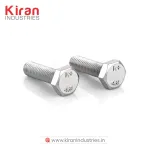
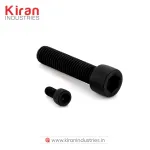
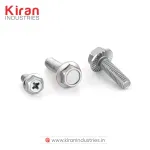
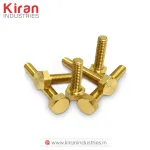
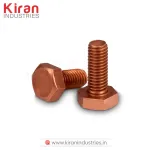
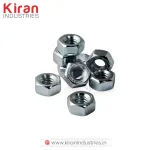
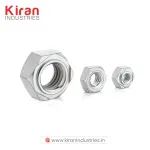
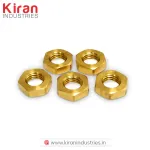
Loose joints don't usually break on the first day. Three months later, at the heart of a production run, it fails due to vibration. That's why the selection of fasteners is not always given the attention it deserves. Flange bolts and flange nuts that complement them take true loads in industrial machinery, auto assemblies, and in general manufacturing every shift.
The inbuilt flange distributes clamping power over a greater area and sometimes the separate washer is not needed. However, this advantage is only demonstrated when the fastener is the perfect match for the repair work. All these factors have to do with size, thread pitch, material, grade, coating and compatibility.
If one gets it wrong, the entire joint is affected. This guide will take you through each factor in simple terms allowing you to set with confidence and in order without second guessing.
Why Choosing the Right Flange Bolts and Nuts Matters
The length of time a joint will hold is determined by the right flange bolts and nuts. They are evenly distributed, maintain clamping force and are not prone to vibration lockout. Assemble also becomes easier, as there is one less part for the fitters to work with. Maintenance staff also benefit because there are fewer rounds to retighten, resulting in less downtime.
When a fastener is a poor match it does exactly the opposite. It is a stress concentrator, it can damage breeding surfaces and it forces return crews to the same joint over and over. Failure of a fastener is a small line failure, but can stall a line. Industrial flange bolts: A small specification discrepancy can be a costly ball and chain.
Key Factors to Consider When Choosing Flange Bolts and Nuts
Make sure to go through these 5 checks on all fasteners before placing an order! Here are the questions that buyers need to ask their engineering team. These are all discussed in more detail below for flange bolts and the corresponding flange nut.
Check Flange Bolt Size and Thread Pitch
Start from the drawing. It already knows what the joint requires so you just need to duplicate it. The most common flange bolt sizes are identified by diameter, thread pitch and length. Metric flange bolts, such as, M10 x 1.5 x 40, which translates to a 10 mm diameter, 1.5 mm pitch, and 40 mm length flange bolt.
Check these things before you place an order:
- The diameter must be the same as the hole and the nut.
- Pitch should be coarse or fine, as indicated. There is no replacement for the two.
- The length should have enough thread engagement but not bottom the needle.
Select the Right Material and Strength Grade
There is a direct correlation between material and strength. Carbon steel is used for general machinery at an appropriate price. Alloy steel is more resistant to heavy loads and harder in duty. Stainless steel does well in the places where moisture and chemicals are found.
Class of property is a measure of strength and flange bolt grades 8.8 and 10.9 are the two most common. The ideal use of Class 8.8 is for normal machinery and structural joints. Class 10.9 is suitable for vibration sensitive or heavily loaded assemblies. Use 10.9 with a compatible nut — if the design calls for high tensile flange bolts use 10.9 with a nut of appropriate class.
Choose Between Serrated and Non-Serrated Flange Bolts
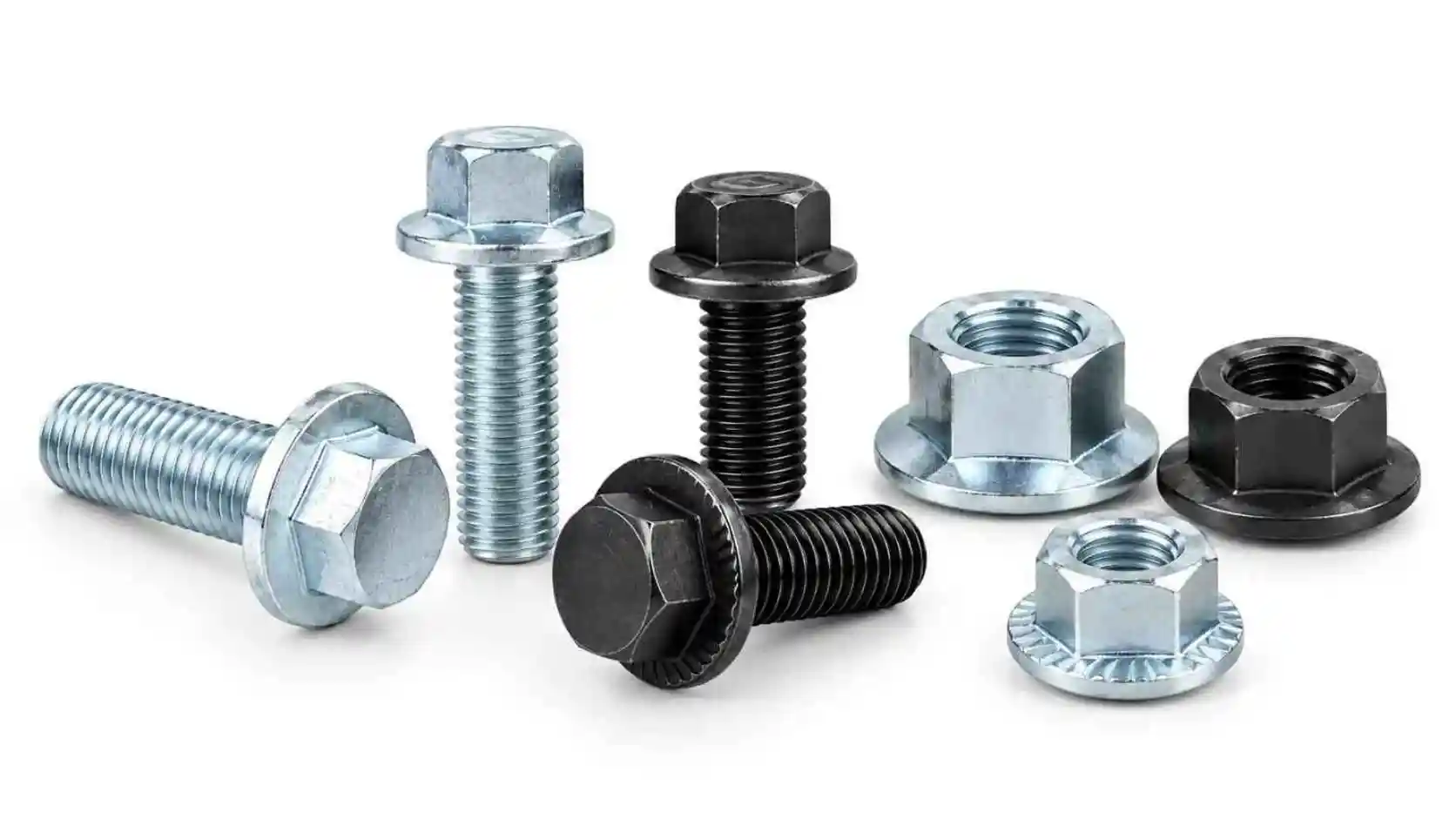
The bottom of the flange is as important as most customers realize. A serrated flange bolt features small teeth which engage the mating surface and prevent working out in vibration. These work on clean or less shiny metal, but can color coated surfaces. Non-serrated versions
keep the surface free of tangles and are appropriate for finished, painted or delicate faces. Both styles of standard hex flange bolts are available so take care to examine the surface before purchasing.
Check out the mating surface and the vibration level, then select the right one for both types:
- Use serrated for vibration, on bare metal.
- For coated, polished or soft mating faces, select non-serrated.
- Wherever surface finish is to remain intact, avoid using serrations.
Consider Surface Coating and Corrosion Resistance
The type of protection depends on the location of the fastener. For indoor assemblies that are not damp, zinc plating is fine. More is required for outdoor, humid or washdown areas. Thicker protection is provided for outdoor and structural use when hot dip is galvanized. Stainless steel does not require a coating to resist rust and much of the chemicals.
Consider moisture, salt, chemicals and temperature when selecting corrosion resistant flange bolts. Coated flange bolts also require maintenance, as the coating can have an impact on thread fit. Be sure that the nuts are finished in the same manner as they can corrode at varying rates if finished differently.
Check Flange Nut and Bolt Compatibility
A strong bolt, but a weak nut, is a weak link. Pairing matters. To ensure a successful load resistant assembly:
- The pitch of thread on the bolt must be the same as the thread to be mounted.
- The property class for the nut should be at or equal to the bolt, e.g. class 8 with 8.8 and class 10 with 10.9.
- The size of the nut must be in accordance with the bolt size.
- The joint design should determine the type of flange: serrated or plain.
A flange nut selected to the bolt will provide you with a predictable clamp. It is also a way to reduce the risk of specification mix-ups by ordering flange bolts and nuts at the same time.
Common Mistakes to Avoid When Selecting Flange Bolts and Nuts
The majority of fastener failures are the result of preventable mistakes. Before ordering or assembly, keep an eye out for these mistakes:
- Checking approximate size rather than diameter, pitch and length to the drawing.
- Application of plain carbon steel when moisture and/or chemicals are a requirement.
- Using a lower grade of nut to join a 10.9 bolt (weakening the joint).
- Avoiding coatings with outdoor or humid applications.
- Over tighten to stretch threads, under tighten to allow the joint to loosen.
Follow the torque wrenching procedure and size and grade specifications. These errors can be avoided if they are caught early, which saves rework. Even the best of flange bolts and flange nuts will not compensate for poor installation.
How to Choose Reliable Flange Bolts Manufacturers in India
It's not just about specification, it's about supplier choice. There are numerous fasteners manufacturers in India, but not all of them are created equal. If you are looking to pick the top flange bolts manufacturers in India, do not take their word for it, but instead, request proof.
Check on these points:
- Manufacturing standards in accordance with recognised standards like ISO, DIN or IS.
- Dimensional accuracy: consistent and standard dimensions of the thread and heads from batch to batch.
- In process and end product quality inspection with test report.
- Traceability of materials by raw material certificates for each batch.
- Ability to supply in bulk, including repeat order lead times.
- Product documentation including test paper, drawings and packing information.
A trustworthy partner readily gives these. A reluctance to make records is a red flag. Sample approvals or audits are done with ease by the established flange bolts manufacturers.
Why Choose Kiran Industries for Flange Bolts and Nuts?
Kiran Industries is a fasteners manufacturer from Rajkot, Gujarat. It produces bolts, nuts and flange bolts for industrial customers. One of the flange bolts manufacturers in this space, it provides a variety of sizes and grades of flange bolts, as well as a corresponding size and grade of flange nut. Check off the following descriptions on the product page and compare them to your drawings. Need availability details? Let Kiran Industries know what quantities and requirements you need and the team will help you with that.
Conclusion
Fastening is quiet if it is good. If the size, grade, material, coating and compatibility are correct, no one will notice the joint, and that is as it should be. Review drawings, match the nut to the bolt and guard the nut and bolt from the environment. After that, find a supplier that can support all its claims with records.
|
Looking for dependable flange bolts for your next order? Send your requirements and quantity to Kiran Industries and obtain a quotation according to your requirement.
|