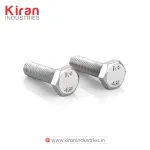
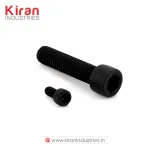
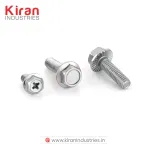
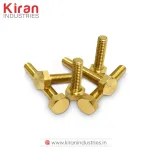
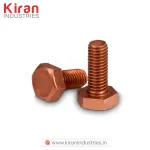
Copper Bolts and Nuts are used in Industrial Applications because of their many benefits.
Copper Bolts and Nuts are used in a variety of electrical, power, marine, and special engineering applications due to characteristics that steel fasteners do not possess—electrical conductivity, corrosion resistance, thermal conductivity, and secure fastening. A Copper Bolt with Copper Nut does not only provide a mechanical connection, but a conductive one as well, ensuring that the joint is not only secure but also electrically reliable.
Kiran Industries is a reliable supplier of materials that are also non-magnetic and anti-corrosive, thus expanding the applications that they can be used for. In many assemblies, the mechanical properties of the fastener material may be of little or no significance when compared with its performance—that is, in the toughest environments where industries are requiring reliable components, Copper Fasteners are gaining greater importance than ever.
What Are Copper Bolts and Nuts?
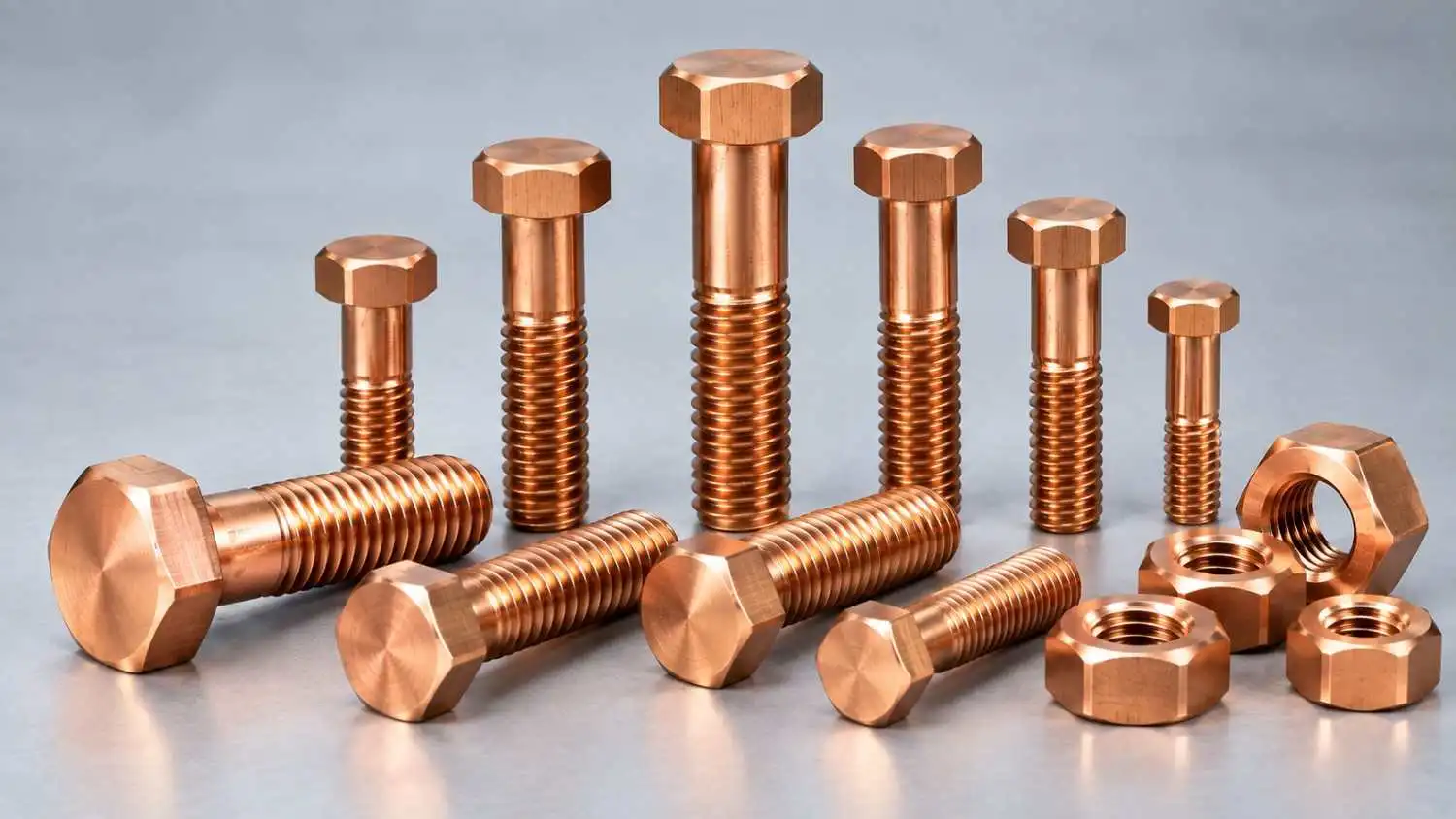
Copper Bolts and Nuts are copper or copper alloy threaded fastenings. The Copper Bolt fits into holes or threaded components to form a removable mechanical connection, secured by the Copper Nut. A Copper Nut Bolt assembly has the ability to hold components securely and impart the natural properties of electrical or thermal conductivity to the assembly.
Here, material selection is important because many industrial fasteners are subject to electrical currents, moisture, temperature changes, vibrations, and/or corrosive environments. Copper is especially suitable for use in applications requiring both conductivity and corrosion resistance.
The typical copper buyers will have the copper grade, size, thread profile, hardness, tolerance, and standards as their requirements depending upon the specific application. Kiran Industries is the trusted supplier of copper bolt who considers all these points and gives you the best industrial solution.
Advantages of Copper Bolts and Nuts in Industrial Applications
When other fastener materials can't match the conductivity, corrosion resistance, or overall compatibility an application needs, industries turn to Copper Bolts and Nuts.
The key benefits are:
- High electrical conductivity—Copper conducts electrical current easily, suitable for electrical contacts, grounding assemblies, power equipment, and other applications.
- Corrosion resistance—Copper can resist corrosion naturally and has a fairly good corrosion resistance performance in many atmospheric and industrial environments.
- Thermal conductivity—Copper conducts heat well, which is useful in assemblies subjected to more heat.
- Non-magnetic properties—Copper is generally non-magnetic, which is important in applications requiring the lack of magnetic interference.
- Industrial Copper Bolts are proven to be reliable fasteners in special-use equipment and challenging assemblies.
- Long service life—Correct selection of copper type, size, load rating, and environment results in a long working life for the copper fastener.
However, the mechanical properties of copper are not as high as some of the high-strength steels, and load requirements should always be determined before specifying copper fasteners.
Where Are Copper Bolts and Nuts Used?
Copper Bolts, nuts, and related fasteners are employed virtually everywhere where their conductive, corrosion-resistant, or non-magnetic characteristics are an added benefit.
Typical applications include:
- Electrical equipment—Busbars, terminals, switchgear, electrical panels, grounding systems, and other conductive connections for efficient current transfer.
- Power systems—transformers and distribution equipment, generators, and other assemblies requiring good electrical continuity.
- Special equipment—A Copper Nut Bolt may be required for certain special machines or assemblies that have special performance needs.
- Marine environments—Copper Nuts and certain copper alloys provide corrosion resistance for many marine applications.
- Industrial electrical assemblies—Any place where a fastener or industrial copper bolts must serve as a secure electrical connection.
- Instrumentation and specialized engineering equipment—Copper's non-magnetic properties are beneficial when equipment could be affected by magnetic materials.
The correct copper grade is required and should always be determined by the environment, load, temperature, and electrical contacts.
How the Choice of Fasteners Is Influenced by This Comparison
The choice of copper, steel, stainless steel, or brass is entirely dependent on the requirement of the application in which it is used and not only the fastener.
The best copper bolts Supplier supplies copper nut bolt that are outstanding in electrical and thermal conductivity, corrosion resistance, and conductive assembly work. However, copper bolt is not as strong mechanically as a steel bolt and is generally more expensive than common steel fasteners.
| Material |
Conductivity |
Strength |
Corrosion Behavior |
Typical Suitability |
| Copper |
Excellent |
Moderate |
Good |
A variety of electrical and special applications. |
| Steel |
Low |
High |
Varies by grade/coating |
Heavy mechanical loads |
| Stainless Steel |
Low |
Moderate–High |
Readily adaptable to many situations |
Corrosive environments |
| Brass |
Good |
Moderate |
Good |
Practical applications in electrical, plumbing, decorative, and engineering. |
Things to Take Into Account When Selecting Copper Bolts and Nuts
There are more factors to consider when choosing the Copper Bolt and Copper Nut than it seems.
Here are some of the key features to look at:
- Diameter and length—Dependent on the joint design, thickness of the materials to be joined, and the number of threads needed.
- Thread profile, pitch, and tolerance—To ensure the correct fit between threads.
- Compatibility of the Copper Nut Bolt—checking the compatibility of the thread and size of the assembly.
- Copper grade—Ensuring that the grade and chemistry of the material are correct for the application.
- Physical conditions—Chemicals, moisture, temperature, marine and industrial environment, electrical exposure.
- Load requirements—Tensile, shear, torque, and other mechanical requirements are to be checked prior to selection.
- Dimensional tolerances—diameter, length, thread, and other critical dimensions.
- Relevant standards—Material certificates, inspection reports, and compliance documentation as required.
With a skilled Copper Bolts Supplier, it is much simpler to obtain the right specifications for the conditions in which you will be using them.
Selecting the Best Copper Bolts and Nuts Manufacturer or Supplier
Steps to take in choosing a proper manufacturer or supplier of Copper Bolts and Nuts:
When making an order for industrial or bulk needs, it is advisable to take into consideration the technical and production capacity of the manufacturer. The Copper Bolts Manufacturer should have a reliable system in place for materials procurement, manufacturing, inspection, and quality control. Similarly, a Copper Nuts Manufacturer ought to be capable of assuring correct dimensions and tolerances on threads.
It's a good idea to make sure of the following before ordering:
- A clear protocol for grading and certifying the copper material.
- Manufacturing and machining capability.
- Ability to measure threads and dimensions accurately.
- Quality control and inspection procedures to maintain consistency and compliance.
- Custom sizes and specifications available.
- Bulk-production capacity.
- Packaging and traceability.
- Minimum order quantity and price details.
- Quality of materials.
An excellent Copper Bolts Wholesaler or Copper Nuts Wholesaler must also be able to supply a consistent quantity for repeat orders for larger quantities. While price is important when comparing suppliers, the other factors of quality, customization, documentation, production capacity, and after-sale service are just as significant.
Conclusion
Copper Bolts and Nuts from Kiran Industries are a practical and effective way to provide holding power and are a great choice when conductivity, corrosion resistance, thermal performance, or non-magnetic properties are required for industrial applications. They can be used across various loads, environments, copper grades, sizes, and applicable standards.
A reliable copper nuts supplier or wholesaler also ensures a steady supply of high-quality copper nuts. Anyone with special or bulk needs may well want to speak with a knowledgeable manufacturer/supplier regarding their needs and requirements to help them decide which copper fastening solution is best for them.
Considering a trustworthy Copper Bolts supplier for industrial and bulk applications?
Choose Kiran Industries, which meets your requirements in terms of size, conductivity, corrosion resistance, and performance.
|
Talk with us about your specific needs and bulk orders, as well as solutions that won't let you down.
|